
By Edward Earwood | SCACS Director / VP of AACS
While I do not know him personally, David Green, founder of Hobby Lobby, provokes some challenging thoughts in my mind as I read his writings. In Green’s latest book, The Legacy Life he makes the case that to effectively establish a legacy, Christians must adopt generational thinking. Merriam-Webster defines legacy as property that is willed to someone or “something transmitted …from a predecessor or from the past;” Green, however, says that while legacy is often viewed as something left behind, legacy is better defined as “something that is set in motion.” How does that align with our thinking?
Strategic thinking and generational thinking should not be viewed in counter intuitive, framed in an Either / Or paradigm. Rather strategic thinking and generational thinking belong in a Both / And paradigm that allows school leaders to focus on strategies for success over the next five to ten years while setting in motion strategies that will support the school for the next century. Strategic thinking asks, “What do we want to accomplish?” while generational thinking asks, “What must endure?”
Six Areas of Generational Planning for Christian Schools
- Protecting Mission Drift Before It Happens
Most Christian schools that have abandoned their founding vision did not do so intentionally. Mission drift typically occurs one generation at a time. Many schools have mission statements; however, these boards have never answered the question “What are the truths that future boards cannot alter without fundamentally changing who we are?” A generational plan should clearly identify the school’s philosophy of education, non-negotiable biblical convictions, and governance safeguards that protect both the philosophy and convictions. The 100-year plan must explain not simply what the school believes but why it exists.
Generational Question
If every current leader disappeared tomorrow, would future leaders clearly understand the school’s biblical purpose?
- Building Leaders Instead of Filling Positions
Strategic thinking rightly includes succession planning, looking one leader ahead. Generational thinking looks much farther down the road, asking “How is the school developing Christian leaders who may lead the school fifty years from now?” Christian schools should envision every graduate as a future teacher or school leader, board member, financial supporter, or crusader for the school. The strongest schools are those training their own future leaders.
Generational Question
How many future board members, faculty, school leaders, or invested families will come from your current students?
- Preserving Institutional Memory
One of the challenges with modern schools is that often they lose their story. Generational thinking reminds schools to become excellent storytellers. This is not as simple as it sounds. Boards and school leaders’ cycle through quickly; sometimes school founders just assume that all stakeholders know the “story” of the school. I find that this is often not the case. Schools must preserve founding documents and historical milestones; however, much more is needed. Oral histories (preserved on audio/video), testimonials from various stakeholders, and other pictorial documents can help provide a more complete picture for generations ahead. And don’t forget, careful records of major decisions in the life of the school, forgetting some of those that weren’t so great and the hard lessons learned from these failures. Memory is key to protecting a school from drift.
Generational Question
Will future school leaders know the stories (history) that shaped the school?
- Preparing Students for Christian Living, Not Just to Make a Living
Many schools prepare students for current challenges; however, generational-minded schools prepare students for future challenges. One hundred years ago, educators could never have imagined biotechnology, digital expansion, artificial intelligence, and many other advancements. But consider what the world will be like in 2126. A wise Christian leader posited that if we want to teach students to make a living, then we are compelled to teach them how to live.
So, generational thinking prioritizes character formation above information or knowledge transfer. Generational thinking asks, “What biblical convictions and character qualities will remain essential regardless of the year or cultural change?” Generational thinking leaders will increase focus on biblical worldview, wisdom and discernment, courage and servant leadership. Why? Because these qualities will never be out of style.
Generational Question
What qualities will be needed for Christians regardless of cultural and technological advancement?
- Focusing on a Financial Legacy Rather than just the Annual Budget
Green (2025) advocates a thinking that is often overlooked in Christian schools: generational thinking resists the urge to only focus on year-to-year financial planning and chooses to focus on century-to-century planning. While thinking out 100 years may seem a far reach, as Christian leaders we must learn to ask an important question – How do we create resources to support Christian education for students that we will never meet?
The goal cannot be merely survival. Generational thinking requires that we develop tools that will support a 100-year vision; these tools may be scholarship funds, planned giving and estate gifts, property acquisition, and permanent endowments. A Christian school with a strong generational mindset and generational assets can remain true to its mission even when external economic and cultural pressures arise or when internal mission creep or lethargy crops up.
Generational Question
What financial decision today will strengthen students and families in 2076? or 2126?
- Measuring Impact Beyond Enrollment
Important to the operation of any school is data related to enrollment, retention, financial indicators, test scores, etc. Most school dashboards abound with this vital information. However, generational thinking seeks to measure outcomes that may not be realized until decades later. While serving on scores of accreditation teams, I am always interested to note the evidence that schools provide to show that their school mission is being fulfilled. Some schools have rich data for support; others, sadly, have very little quantifiable evidence. Others have minimal anecdotal evidence.
Schools should know how their graduates perform in future academic endeavors, in the workplace, and in community and societal service. But what about other successes? How do graduates influence culture as a Christian professional? How many graduates serve as church or ministry leaders? How many return to provide Christian education for their own children or grandchildren? Are graduates investing into Christian education? For generational thinkers, these and other questions should be a part of measuring the impact.
Generational Question
What evidence would demonstrate “mission accomplished” for both current and future generations?
Generational thinking requires that we think differently. How? A Christian school that plans ten years ahead is preparing for the tenure of its current leadership; however, a Christian school that plans for one hundred years is preparing for students and families not yet born. Generational thinking requires that leaders move beyond asking “What can we accomplish during my leadership? to asking “What legacy are we leaving for those who will steward this mission after we are gone.”
In his book Future Shock, Alvin Toffler (1928-2016) stated that “The illiterate of the twenty-first century will not be those who cannot read and write, but those who cannot learn, unlearn, and relearn.” As Christian leaders, we must unlearn and re-learn the power of legacy. Legacy cannot be only what we leave behind (things tangible). Generational thinkers must view legacy as “things that are set in motion.”
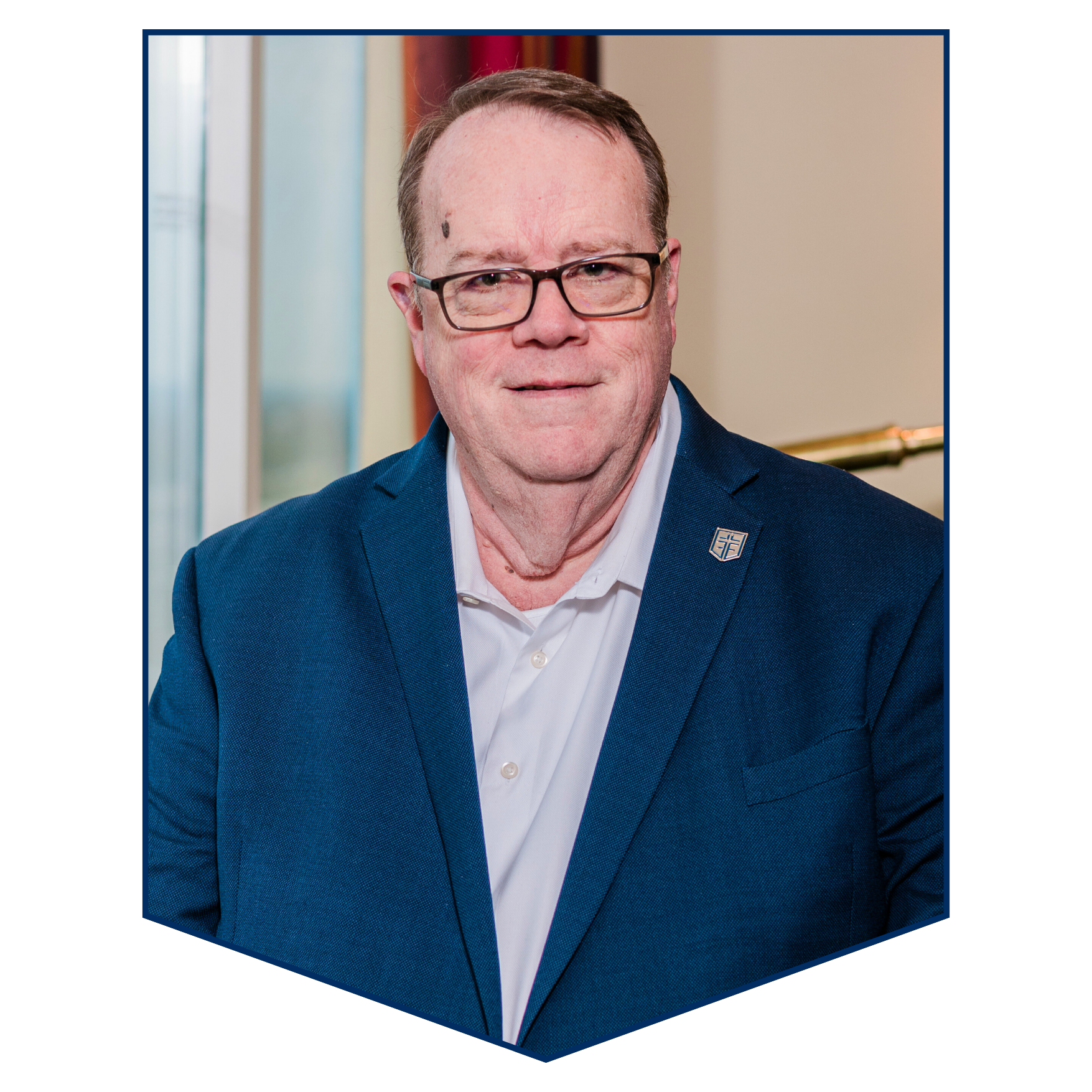
Edward Earwood, President of Fortify Foundation, currently serves as the Executive Director of South Carolina Association of Christian Schools, bringing 42 years of Christian education ministry experience. He held pivotal roles, including Director of Student Services at Alabama Christian Education Association for nine years. A Bob Jones University and Pensacola Christian College alumnus, Edward co-authored “A Scent of Water” in 2012. Married to Debra, they actively serve at Grace Baptist Church, West Columbia, South Carolina.